
"seed drying"
4000 article(s) found

Coffee and its products-terminology
The national standard of the people's Republic of China Coffee and its products Vocabulary GB/T 18007 1999 terms for coffee and its products this standard specifies the most commonly used terms for coffee and its products. This standard is applicable to the formulation and revision of relevant standards and documents, as well as the preparation and translation of professional manuals, teaching materials, books and periodicals. 2 Coffee nouns and definitions 2.1 General techniques

What are the benefits of coffee beans in the sun? What are the ways of drying raw coffee beans in addition to the sun?
Professional coffee knowledge exchange more information about coffee beans Please follow the coffee workshop (Wechat official account cafe_style) what are the benefits of coffee beans in the sun? What are the ways of drying raw coffee beans in addition to the sun? The requirement of the sun treatment on the climate is very high. After the coffee fruit is harvested, the farmers will directly dry it in the sun. After 23 weeks of sun drying, the coffee fruit will be shelled again.

Comprehensive data of Yunnan Coffee knowledge Yunnan Simao small seed Coffee
Coffee is an advantageous and characteristic industry in the hot area of our city, and it is also one of the main agricultural products that our city exports to earn foreign exchange. In order to standardize the production technology, product standards and marketing behavior of coffee industry in our city, and improve the standardization level of coffee industry, the comprehensive standard of Pu'er small seed coffee was compiled according to the requirements of GB/T1.1 and GB/T1.2. This section defines the terms and definitions in the initial processing of small seed coffee.
Talking about Coffee beans
1. Summary: coffee is a perennial evergreen shrub or small tree of Rubiaceae. It is native to tropical Africa and has been cultivated for more than 2000 years. The Arabs began to grow coffee in 525 BC, and it was popular for Arabs to stir-fry coffee beans. They began to grow coffee beans on a large scale after the 15th century, and were widely distributed in the tropics and subtropics of Europe, Asia, Africa and Latin America after the 18th century.
A brief talk on understanding coffee beans
1. Summary: coffee is a perennial evergreen shrub or small tree of Rubiaceae. It is native to tropical Africa and has been cultivated for more than 2000 years. The Arabs began to grow coffee in 525 BC, and it was popular for Arabs to stir-fry coffee beans. They began to grow coffee beans on a large scale after the 15th century, and were widely distributed in the tropics and subtropics of Europe, Asia, Africa and Latin America after the 18th century.
Comprehensive data of small seed Coffee in Simao, Yunnan
Coffee is an advantageous and characteristic industry in the hot area of our city, and it is also one of the main agricultural products that our city exports to earn foreign exchange. In order to standardize the production technology, product standards and marketing behavior of coffee industry in our city, and improve the standardization level of coffee industry, the comprehensive standard of Pu'er small seed coffee was compiled according to the requirements of GB/T1.1 and GB/T1.2. This section defines the terms and definitions in the initial processing of small seed coffee.
A brief discussion on the knowledge of Coffee beans Encyclopedia
1. Summary: coffee is a perennial evergreen shrub or small tree of Rubiaceae. It is native to tropical Africa and has been cultivated for more than 2000 years. The Arabs began to grow coffee in 525 BC, and it was popular for Arabs to stir-fry coffee beans. They began to grow coffee beans on a large scale after the 15th century, and were widely distributed in the tropics and subtropics of Europe, Asia, Africa and Latin America after the 18th century.

Coffee beans are important raw materials for making beverages
1. Summary: coffee is a perennial evergreen shrub or small tree of Rubiaceae. It is native to tropical Africa and has been cultivated for more than 2000 years. The Arabs began to grow coffee in 525 BC, and it was popular for Arabs to stir-fry coffee beans. They began to grow coffee beans on a large scale after the 15th century, and were widely distributed in the tropics and subtropics of Europe, Asia, Africa and Latin America after the 18th century.
The cultivated varieties of Coffee Tree: small seed and large seed
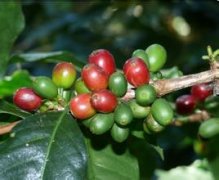
3. Cultivated varieties (1) small seed species (2) large grain species Coffea belongs to Rubiaceae, Coffea belongs to perennial evergreen shrubs or small trees, there are about 90 species. At present, there are small seed species (Arabian species), medium grain species (Gaffra species) and large grain species (Liberian species) cultivated in Hainan. (1) small seed species: also known as Arabian species, native to Ethiopia, evergreen shrubs. The plant is small, 4cm high and 5m high

Understand the growth process of a coffee from a coffee seed to a coffee tree!
Professional coffee knowledge exchange more coffee bean information please follow the coffee workshop (Wechat official account cafe_style) then today the editor will popularize science for you, the growth process of a coffee from coffee seed to coffee tree! It usually takes 4 to 5 years for coffee trees to grow from seed to germination to grow into a tree and then to blossom for the first time. From the moment the seed is sown to the soil
A brief talk on the basic knowledge of Fine Coffee with Coffee beans
1. Summary: coffee is a perennial evergreen shrub or small tree of Rubiaceae. It is native to tropical Africa and has been cultivated for more than 2000 years. The Arabs began to grow coffee in 525 BC, and it was popular for Arabs to stir-fry coffee beans. They began to grow coffee beans on a large scale after the 15th century, and were widely distributed in the tropics and subtropics of Europe, Asia, Africa and Latin America after the 18th century.
Coffee beans have the same characteristics as those of coffee beans.
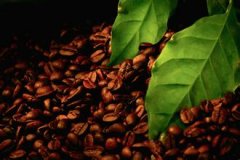
1. The seed coat of small fruit coffee has been removed, oval or oval in shape, 8-10mm in length, 5-7mm in diameter, 3-4mm in thickness in the middle, raised on the back, flat on the ventral surface, with slightly curved longitudinal groove and paper seed coat marks. Raw products are yellow or dark green; baked products are dark brown with special aroma and slightly bitter taste. Astringent. Coffee flower 2. Coffee seeds are slightly larger, ovoid, 9-11mm long and 7-7-in diameter.
Coffee beans have the same characteristics as those of coffee beans.
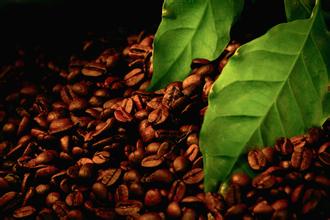
1. The seed coat of small fruit coffee has been removed, oval or oval in shape, 8-10mm in length, 5-7mm in diameter, 3-4mm in thickness in the middle, raised on the back, flat on the ventral surface, with slightly curved longitudinal groove and paper seed coat marks. Raw products are yellow or dark green; baked products are dark brown with special aroma and slightly bitter taste. Astringent. Coffee flower 2. Coffee seeds are slightly larger, ovoid, 9-11mm long and 7-7-in diameter.

Which kind of small seed seeder is good for large seeds of coffee beans?
Coffee beans large seed small seed seeder seed selection Coffee mother tree fully mature, fruit shape is normal, full, the same size, with two seeds of fruit. To remove the peel of the selected fruit, you must be careful to prevent the seeds from being damaged and affect the germination rate, then put the peeled seeds in a ventilated and cool place to dry, and the seed shell can be stored after whitening.

Coffee fruit to seed process-coffee fruit decomposition diagram
Coffee fruit to seed process-Coffee fruit decomposition map from harvest to delivery after the harvest of the fruit, the skin and pulp. The endocarp and silver peel are removed to form coffee beans. There are two kinds of methods: drying (natural drying, non-washing) and washing. Dry type, easy to operate, spread the harvested fruit on the dry ground, bask in the sun for a week or two, and you can hear it when you turn it.
An introduction to the basic concept of raw beans
Douxiao doesn't look good. Grading: the seeds are taken out and then screened and graded. Guatemala, Costa Rica and other countries are rated according to the planting height, more than 4500 feet above sea level is the highest "extremely hard bean" (SHB). Colombia, Kenya and New Guinea are graded by particle size, with larger and higher grades (with the exception of Kenyan beans). In addition, there are some producing countries in accordance with the defects.

Eincht Manor in Guatemala | Malavi Rose Summer seed | Ruby Rose 2018 Solar treatment
Professional coffee knowledge exchange more coffee bean information please follow coffee workshop (Wechat official account cafe_style) front street coffee recommendation rose summer 2018 rose summer village rose summer green mark | ruby rose summer-tanning treatment EI02-02 batch GESHA RUBY DRY PROCESS EI02 name: ruby rose summer-sun treatment method EI02-02 batch GESHA

Introduction to the basic knowledge of raw beans in boutique coffee
Douxiao doesn't look good. Grading: the seeds are taken out and then screened and graded. Guatemala, Costa Rica and other countries are rated according to the planting height, more than 4500 feet above sea level is the highest "extremely hard bean" (SHB). Colombia, Kenya and New Guinea are graded by particle size, with larger and higher grades (with the exception of Kenyan beans). In addition, there are some producing countries in accordance with the defects.
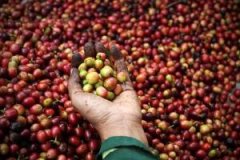
The treatment of Coffee seed Manning Coffee in China Coffee Network Coffee production area Coffee
Sellers often mark Lintong Lindong and Mandheling Manning coffee as dry. In fact, the pulp and coffee seeds are often separated by a variety of mixing modes, and the more common is a backyard wet treatment. The smart farmer put the freshly picked coffee cherries into a simple peeling machine made of scrap metal, wood and bicycle parts. Then stick the peeled ones.